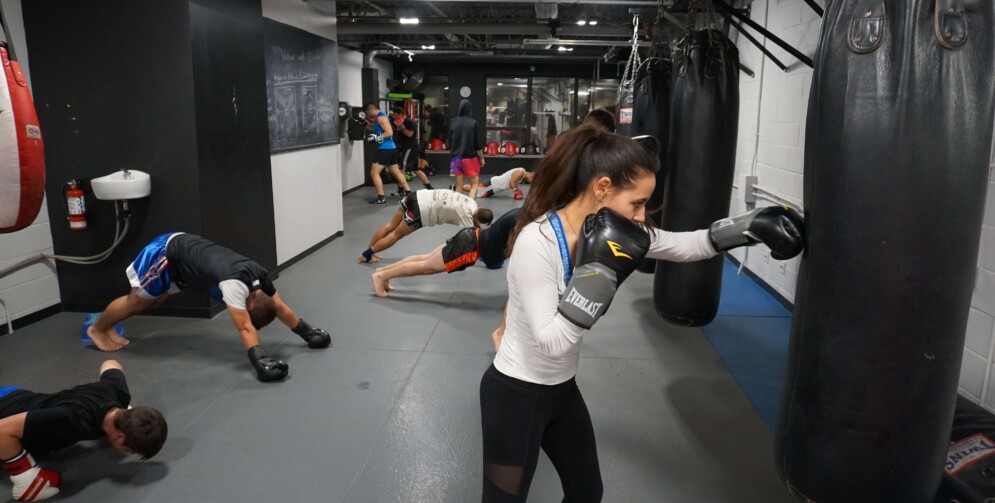
Fitness kickboxing (also called non-contact boxing) blends traditional punching and kicking techniques with
modern exercise science. Instead of sparring with a partner, you strike a heavy bag or pads while moving
through body‑weight exercises and athletic drills. The result is a total-body workout that builds
endurance, coordination and confidence without the risk of being hit. Because there is no physical contact
with other participants, the discipline is safe for beginners while still providing a demanding athletic
challenge for seasoned athletes.
Origins: from martial arts to cardio fitness
History of kickboxing
The sport of kickboxing began as a hybrid combat art in Japan during the 1960s when promoters blended
Muay Thai, karate and Western boxing to create a rule set that allowed both punching and kicking. Japanese boxing promoter
Osamu Noguchi coined the term “kickboxing” and promoted early events in Osaka and Tokyo. This
hybrid quickly spread to Europe and North America and evolved into various point‑fighting and full‑contact
disciplines. For a detailed overview of its evolution, consult the
Kickboxing history page.
Cardio kickboxing and Tae Bo
In the early 1990s martial‑arts promoter Frank Thiboutot realised that the techniques of combat sports could
form the basis of an intense aerobic class. He introduced cardio kickboxing, a music‑driven workout
where participants punch and kick heavy bags while moving continuously. Around the same time martial artist
Billy Blanks popularised Tae Bo, a workout combining taekwondo movements with dance choreography. Tae Bo
videos became international bestsellers in the 1990s and showed that millions of people were interested in
martial‑arts‑inspired fitness rather than fighting.
Kickboxing in the West
After the sport’s debut in Japan, kickboxing gained traction in the United States and Europe during the 1970s.
Organisations such as the World Kickboxing Association and the Professional Karate Association held
televised bouts that blended karate and Muay Thai rules. These events introduced western audiences to
full-contact kicking and punching and helped lay the groundwork for modern competitions and fitness programs.
Today the sport continues to evolve with variations ranging from semi-contact point fighting to professional
K-1 events.
Development of full-contact competitions
Kickboxing didn’t just remain a hybrid fitness class; in the 1970s it grew into a professional sport. The
Professional Karate Association
held the first World Championships in 1974 at the Los Angeles Sports Arena, bringing together fighters who mixed
karate and boxing techniques. These full‑contact bouts required competitors to deliver above‑the‑waist kicks while
wearing boxing gloves, and the PKA’s televised events helped popularise kickboxing in the United States and Europe.
This exposure paved the way for modern sanctioning bodies and competitions such as K‑1.
Rise of fitboxing
In Europe and Latin America a new concept called fitboxing emerged in the 2010s. Studios began
combining heavy‑bag striking with functional strength circuits, often measuring each punch’s power and timing
with sensors embedded in the bag. This technology gamifies the training and allows participants to track
progress over time while enjoying the motivational atmosphere of a group class.
How a fitness kickboxing class works

A typical session lasts between 45 and 60 minutes and follows a predictable structure that allows beginners
to learn proper technique while challenging experienced athletes. Understanding each phase helps you get more
out of your workouts.
Technique and stance
Before you start throwing combinations, you’ll learn how to stand and move. A solid fighting stance places
the feet shoulder-width apart with knees slightly bent and the non-dominant foot forward. Instructors teach you
to keep a protective guard, rotate through the hips and pivot on the balls of the feet to generate power while
keeping the wrists straight. Controlled breathing and a relaxed but engaged core help you move efficiently and
reduce the risk of injury.
Warm‑up
Classes begin with light jogging or jump‑rope drills followed by dynamic movements like arm circles, leg swings
and walking lunges. These activities increase heart rate, warm the muscles and lubricate the joints for the
more explosive work to come. Proper warm‑up reduces injury risk and primes your nervous system for fast
reactions.
Striking rounds
The bulk of the class involves punching and kicking a heavy bag using combinations such as jabs, crosses,
hooks, uppercuts and front or roundhouse kicks. Instructors often use timed intervals, for example
three minutes of work followed by 30 seconds of rest, to simulate boxing rounds. Moving with good
technique while keeping your guard up builds power, coordination and cardiovascular endurance. The
Cleveland Clinic
notes that throwing punches engages the entire body, from legs to core to arms, and challenges your brain to
remember combinations and react quickly.
Common strikes and kicks
Instructors teach several basic punches and kicks that form the building blocks of any combination. These include
jabs, crosses, hooks and uppercuts for the upper body and knee strikes, front, roundhouse, side and back kicks for
the lower body. Practising these movements develops coordination and timing while challenging the shoulders, hips
and core. Many classes also integrate knee lifts, elbow strikes and other variations to keep your mind engaged and
work different muscle groups.
Functional training and cool‑down
To create a balanced workout, instructors incorporate body‑weight circuits between striking rounds. These may
include squats, lunges, push‑ups, burpees, medicine‑ball slams or planks. Functional exercises build strength
and power while reinforcing the core stability needed for strong punches and kicks. At the end of class,
static stretching and breathing exercises help reduce muscle soreness and improve flexibility.
Benefits of non‑contact kickboxing
Calorie burn and weight loss
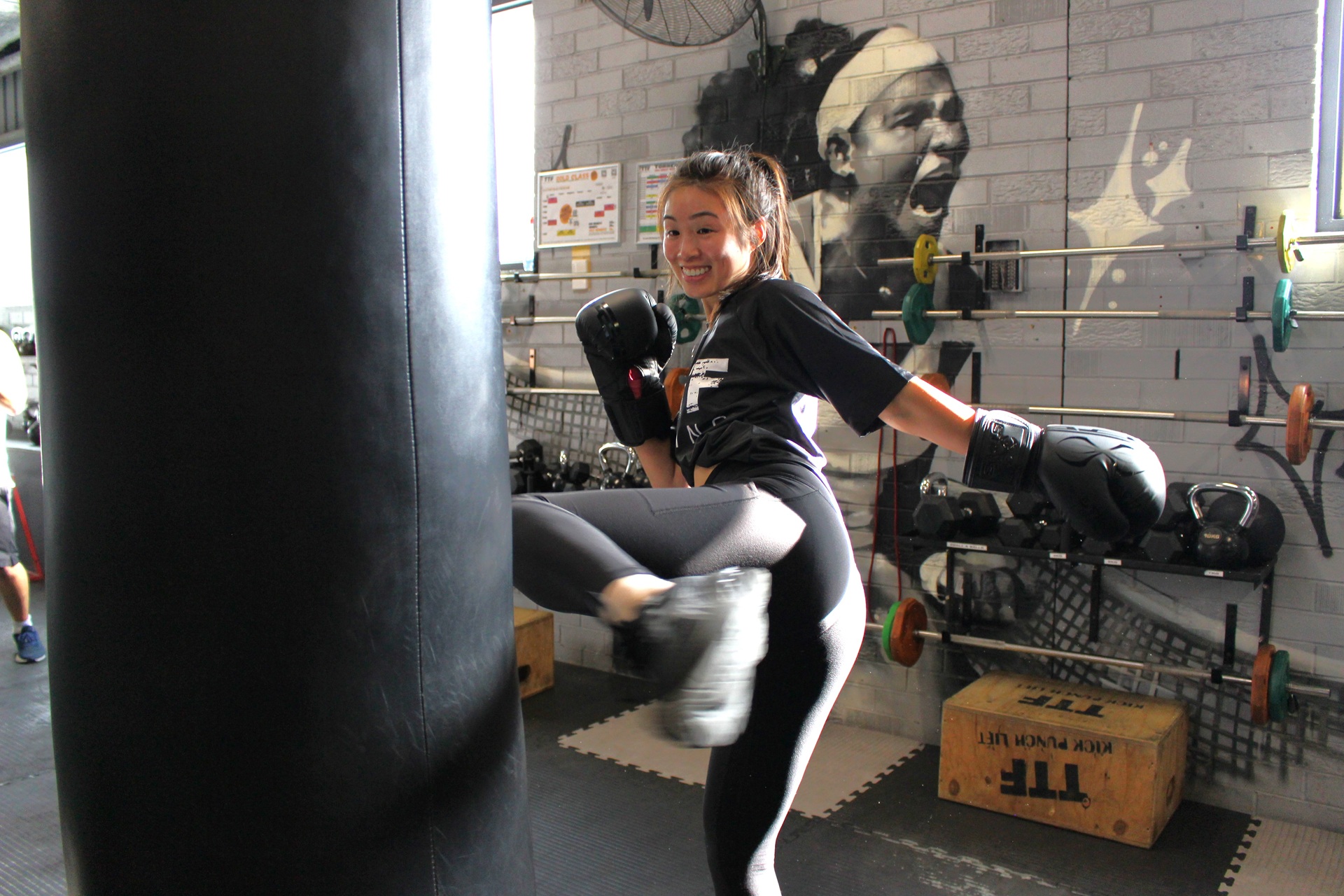
Moving continuously and striking a heavy bag is a vigorous cardiovascular workout. Reports from the
American Council on Exercise suggest that most participants burn between 350 and 450 calories per hour
during a cardio kickboxing class. A 16‑week study summarised by the
National Federation of Professional Trainers
compared a bag‑training group with a brisk‑walking group. Those who punched the bag lost an average of
11 pounds (about 5 kg), reduced their waist circumference by 2.6 inches and lowered body fat by
around 13 percent. By contrast, the walking group saw only modest improvements.
Cardiovascular and metabolic benefits
High‑intensity intervals elevate your heart rate and improve aerobic capacity. The Cleveland Clinic
explains that boxing workouts challenge the cardiovascular system while developing balance and footwork
skills. Because punching power originates from the legs and core, you engage large
muscle groups that stimulate metabolism and help manage blood-sugar levels. Consistent training can improve
blood pressure, reduce resting heart rate and support weight management.
Strength and coordination
Each punch begins at the feet, travels through the hips and core and finishes with the arms. This kinetic
chain develops full‑body strength and improves postural stability. Throwing hooks and uppercuts challenges
your balance and rotation, while the functional training circuits build lower‑body and core muscles. The
Cleveland Clinic notes that punching drills enhance hand‑eye coordination and force you to organise and
strategise sequences of movements.
Power, balance and agility
In addition to strength, kickboxing develops power (the ability to generate force quickly) because each strike
requires speed and control. Time magazine notes that training involves
short bouts of intense repetitive movement (two or three minutes long) that build both power and agility. Research
summarised in the article reports that healthy men improved their upper‑ and lower‑body power by about 7 percent
after just five weeks of kickboxing practice. Kickboxing also enhances balance and neuromuscular
control; this benefit carries over to everyday activities for older adults and people with neurological conditions.
The same source explains that combining force with speed improves anticipatory and reactive balance, which reduces
fall risk and improves mobility.
Mental benefits
Beyond the physical changes, non‑contact boxing offers mental health benefits. A Harvard Health
article reports that boxing fitness can improve balance, posture and hand‑eye coordination for people
managing conditions like Parkinson’s disease. Focusing on punch combinations keeps
your brain engaged and may improve memory and concentration. Striking a bag also
provides a healthy outlet for stress, releasing endorphins that elevate mood and leave you feeling more
empowered after class.
Confidence and self-esteem
Kickboxing training isn’t just about burning calories; it teaches you to move with purpose. Performing assertive movements and
mastering challenging combinations can boost your confidence. Many studios emphasise confidence-building as part of the curriculum,
and Healthline notes that practising martial arts improves
self-confidence and that regular exercise is linked to higher self-esteem. A review of non-contact boxing programmes published
in the American Journal of Lifestyle Medicine found that 94 percent of studies
reported reductions in stress and improvements in mood, self-esteem and quality of life. These mental gains carry over into
everyday life and can improve your sense of self-worth.
Better sleep and stress relief
Vigorous exercise can improve your sleep quality. Healthline explains
that physical activity helps people (including those with sleep disorders) fall asleep more easily and stay asleep longer.
Regular kickboxing classes also increase endorphins and balance hormones, which can alleviate stress, anxiety and depression.
Better rest in turn improves your mood, concentration and energy levels throughout the day. Hitting a bag is also a healthy way
to release frustration, and studies of non-contact boxing programmes report reductions in stress and anger as participants learn to
channel their energy productively.
Cognitive benefits
Kickboxing trains both body and mind. Performing complex combinations while staying light on your feet challenges your brain to process
information quickly and coordinate multiple movements. Research shows that regular physical activity increases the size of brain
regions involved in memory and thinking. According to Harvard Health,
moderate-intensity aerobic exercise sustained over months can improve memory, cognitive flexibility and attention. A
scoping review of non-contact boxing programmes noted that participants reported improved mood,
self-esteem and quality of life, with reductions in symptoms of depression and anxiety. Because kickboxing requires focus,
rhythm and coordination, it may help sharpen mental clarity and keep your brain engaged.
Try our classes at TTF Kick Punch Lift
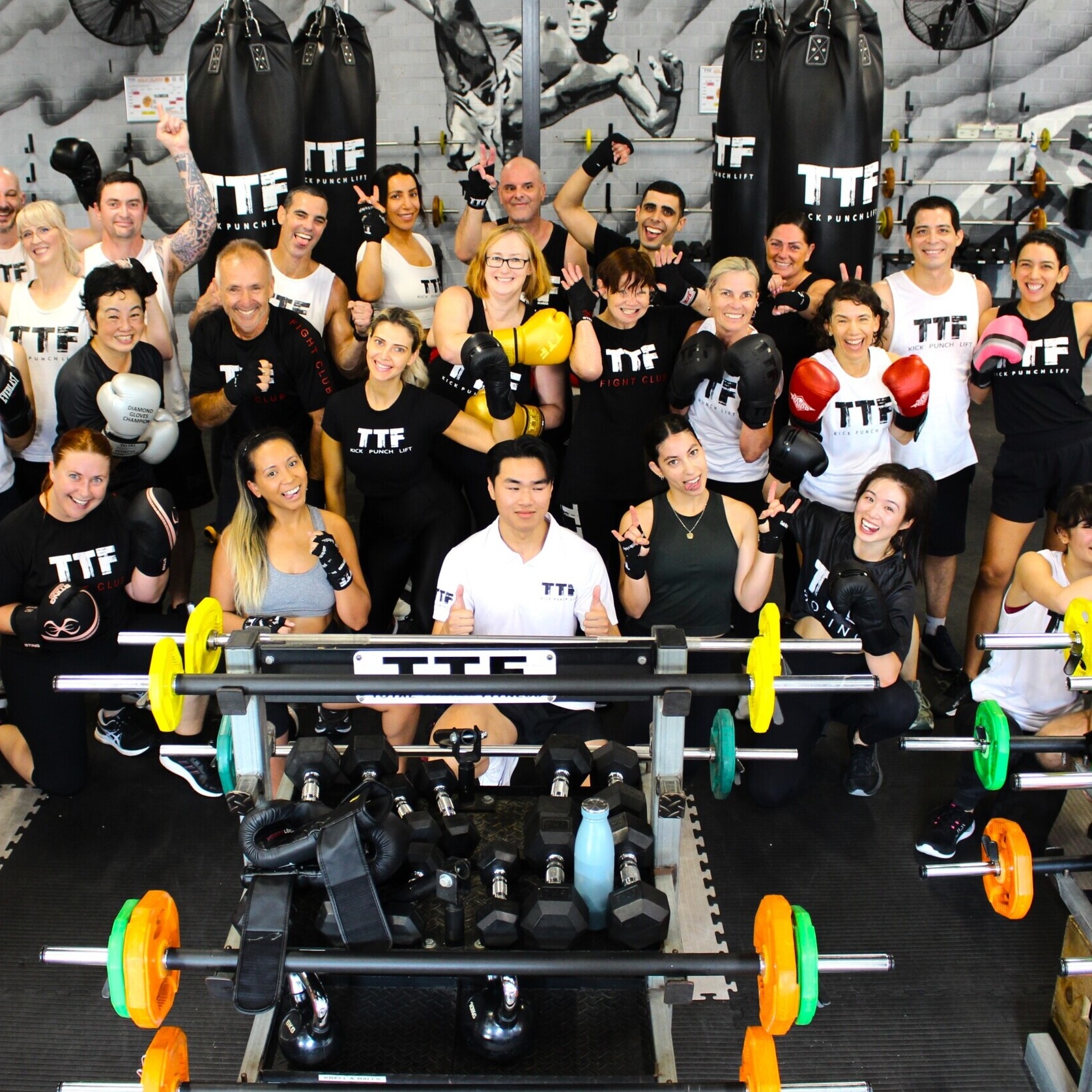
If you’re in Adelaide and want to experience fitness kickboxing for yourself, we offer several non‑contact
classes at TTF Kick Punch Lift. Each session has a different focus so you can mix and match according to your
goals:
- Boxing Fitness – our flagship class. High
energy rounds on the heavy bag are combined with functional circuits to improve cardio, strength and
coordination. - Kick n Cardio – steady-state work at roughly
60 to 70 percent of your maximum effort. Ideal for building aerobic endurance and
developing a strong base. - Kick n HIIT – explosive bursts and rest
intervals that push you to 80 to 100 percent of your max. This high‑intensity training stimulates
the after‑burn effect and accelerates fat loss. - Kick n Butt – combines kickboxing with
lower‑body strength work and active recovery. Great for building powerful glutes and legs while
maintaining a cardio element. - Kick n Core – a low-impact option focusing
on core stability, balance and injury prevention. Ideal if you want to strengthen your midsection
without high‑impact movements.
Modifications and gear
Kickboxing is adaptable. If you’re new to high-intensity exercise or have a medical condition, start slowly and
modify movements as needed. Work with your instructor to lower the height of kicks, reduce impact and take
extra rest. According to WebMD, beginners should ease into classes, drink plenty of water and
listen to their bodies. Proper equipment (gloves, hand wraps and supportive footwear) helps protect your joints, and you
can purchase gear or borrow it from the studio. Always consult a doctor before starting a new fitness routine if you
have heart, joint or other health concerns.
Safety tips
Although these workouts are non‑contact, they are still demanding. To get the most out of a class while
avoiding injury, consider the following tips:
- Take time to learn proper punching and kicking technique. Keep your wrists straight, rotate your hips
into strikes and maintain a balanced stance. - Start slowly and build intensity over several weeks. Beginners should focus on form before adding power or
speed. - Use hand wraps and quality gloves to protect your knuckles and wrists. Make sure the bag is at the right
height for your kicks. - Listen to your body. If you feel pain (other than normal muscle fatigue) stop and consult an instructor.
Stay hydrated before, during and after class.
Joint health and injury prevention
While non‑contact kickboxing is generally safer than sparring sports, repetitive striking and high‑intensity
movements can still lead to overuse injuries if technique or warm‑up is neglected. The government‑run Better Health Channel
explains that martial arts (including kickboxing) improve cardiovascular fitness, strength, speed and flexibility but that
most injuries are mild bruises, strains and sprains. To protect your joints:
dedicate at least 15 minutes to stretching before throwing kicks or punches, maintain a bent‑knee stance to reduce stress on the joints,
and listen to your body. Proper technique, regular stretching and rest days help keep your muscles and ligaments
healthy. Seek prompt treatment for any persistent pain so you can return to training quickly.
Progression and long-term development
Consistency and progression are key to long-term results. Reviews of boxing programmes suggest that 60 to 90 minute sessions two
or three times per week over six to nine weeks produce significant improvements in fitness and mental well-being. As your skills
improve, gradually increase the intensity, add resistance exercises or combine kickboxing with strength training to continue
challenging your body. Schedule rest days between sessions to allow your muscles and nervous system to recover.
Conclusion
Fitness kickboxing has grown from a niche offshoot of martial arts into a mainstream training method because
it delivers results: calorie burn, improved heart health, functional strength and mental clarity. Unlike
traditional combat sports, it’s accessible to people of all ages and backgrounds. Whether you’re looking
for an engaging way to get fit, relieve stress or complement other sports, a structured non‑contact kickboxing
class offers an empowering path forward. We hope to see you on the bag soon!
References
To learn more about the science behind fitness kickboxing, explore these external resources:
- Cleveland Clinic: Benefits of Boxing – explains how boxing engages the entire body and benefits your heart, balance and coordination.
- NFPT: Fitness Benefits of Boxing – summarises research comparing bag training with walking and reports average weight loss and waist reduction after a 16-week program.
- Harvard Health: Punch Up Your Fitness – describes the health benefits of non-contact boxing for balance, posture and mental well-being.
- Healthline: What Are the Benefits of Kickboxing? – discusses calorie burn, improved confidence, better sleep, stress relief and safety tips.
- WebMD: Kickboxing Workouts – outlines the calorie expenditure, targeted muscle groups and tips for beginners.
- Wikipedia: Kickboxing – provides a historical overview of how the sport developed from Japanese hybrid martial arts into modern forms around the world.
- Harvard Health: Exercise and Brain Health – explains how regular exercise increases brain volume and improves memory and thinking skills.
- American Journal of Lifestyle Medicine: Boxing and Mental Health – a scoping review summarising how non-contact boxing programmes reduce stress and improve mood, self-esteem and quality of life.